
The Role of Leadership in AI Adoption
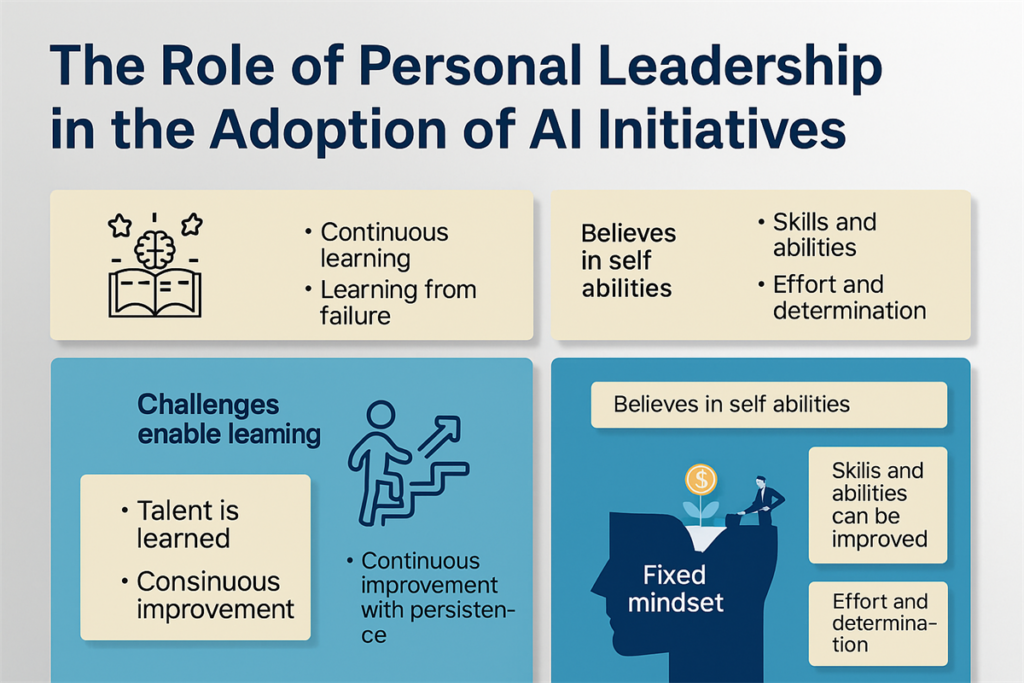
AI adoption does not succeed or fail at the technical level — it succeeds or fails at the leadership level. Technology teams can deploy capable models, security teams can enforce controls, and vendors can provide sophisticated platforms, but without active, informed leadership engagement, AI initiatives stall, fragment, or create risks that the organization is unprepared to manage. Leadership shapes the conditions under which AI either delivers lasting value or becomes a source of liability.
Setting strategic direction is the most fundamental leadership responsibility in AI adoption. Leaders must define what problems the organization is actually trying to solve with AI, and resist the pressure to adopt technology for its own sake. A clear AI strategy articulates use case priorities, acceptable risk thresholds, and the relationship between AI capabilities and broader business objectives. Without this direction, teams pursue disconnected pilots that rarely scale, and the organization accumulates technical and governance debt without a coherent path forward.
Establishing accountability structures is equally critical. AI initiatives that lack clear ownership tend to drift. Leaders must designate accountable individuals — whether a Chief AI Officer, an AI governance committee, or designated business unit owners — who are responsible for outcomes, not just outputs. This includes accountability for how AI systems perform over time, how incidents are handled, and how the organization responds when AI-generated decisions cause harm or produce unintended results.
Allocating resources appropriately signals organizational seriousness. AI adoption requires investment not only in tools and infrastructure, but in training, change management, and governance capacity. Leaders who fund the technology but underfund the people and process dimensions create systems that are technically capable but organizationally fragile. Effective leaders treat AI governance as a core operational function, not an afterthought.
Building a culture of responsible AI use is perhaps the most durable contribution leadership can make. This means modeling thoughtful engagement with AI tools, encouraging employees to raise concerns about AI outputs rather than accepting them uncritically, and establishing psychological safety around reporting errors or misuse. Culture is set from the top — if leadership treats AI as infallible or dismisses governance concerns as bureaucratic friction, those attitudes will propagate throughout the organization.
Finally, leaders must engage actively with regulatory and ethical dimensions of AI rather than delegating them entirely to legal or compliance teams. Regulations governing AI are evolving rapidly, and the reputational consequences of getting this wrong are significant. Leaders who stay informed about the regulatory landscape — and who treat ethical AI use as a genuine organizational value rather than a box-checking exercise — position their organizations to adapt as expectations change and to maintain the trust of customers, employees, and regulators alike.