
AI Incident Response and Recovery
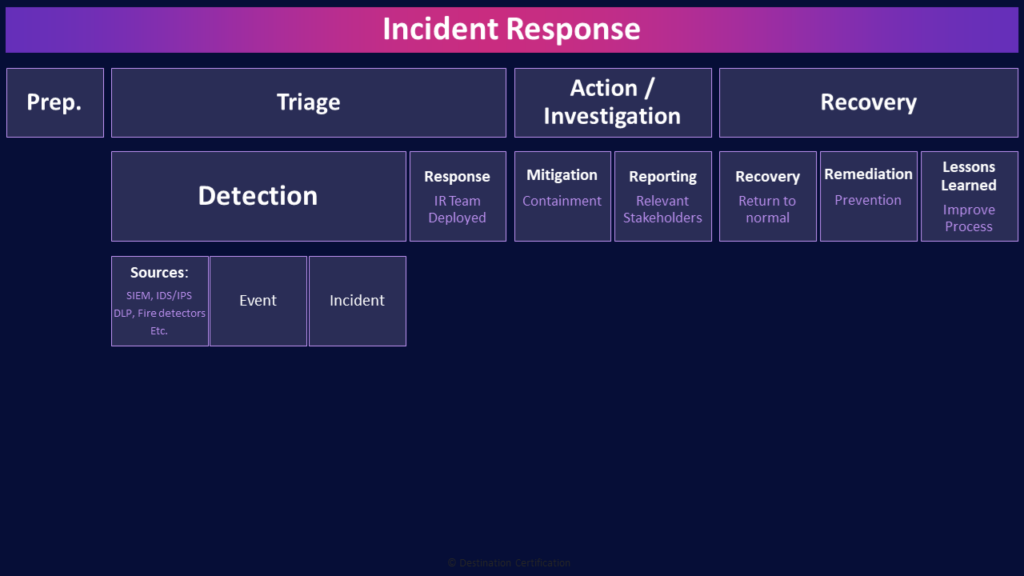
AI systems introduce a category of incidents that traditional incident response frameworks were not designed to handle. A misconfigured firewall and a model producing systematically biased outputs are both organizational problems, but they require fundamentally different detection approaches, containment strategies, and remediation paths. Enterprises that rely solely on existing IT incident response procedures when AI systems fail will find those procedures inadequate. Building AI-specific incident response capability is not optional — it is a governance requirement for any organization operating AI in consequential domains.
Defining what constitutes an AI incident is the necessary starting point. The scope is broader than most organizations initially assume. AI incidents include not only security events — such as unauthorized access to model endpoints or extraction of training data — but also operational failures like model drift causing degraded output quality, algorithmic errors producing incorrect decisions at scale, prompt injection attacks manipulating model behavior, data poisoning affecting model integrity, and privacy breaches resulting from models surfacing information they should not. Each of these incident types has distinct characteristics that affect how it is detected, classified, and contained.
Detection and monitoring are the first practical challenge. Unlike a server outage, a model producing subtly wrong outputs may not generate any alerts in conventional monitoring systems. Organizations need AI-specific observability: tracking output distributions over time, monitoring for anomalous query patterns that may indicate adversarial probing, logging model inputs and outputs for post-incident forensic analysis, and establishing baseline performance metrics against which degradation can be measured. Without this instrumentation in place before an incident occurs, response will be reactive and slow.
Containment procedures for AI incidents must account for the fact that the impact may already be distributed before detection. If a model has been producing incorrect outputs for weeks, decisions made during that period may need to be reviewed and potentially reversed. Containment actions might include isolating the affected model endpoint, rolling back to a previous validated model version, suspending automated decision pipelines that depend on the model, or temporarily increasing human review requirements for AI-assisted outputs. The appropriate response depends heavily on the incident type and the criticality of affected systems.
Investigation and root cause analysis for AI incidents is technically demanding. Understanding why a model began producing anomalous outputs requires examining training data provenance, recent changes to model configuration or fine-tuning, input characteristics during the affected period, and infrastructure changes that may have affected model serving. Organizations should designate individuals with sufficient AI and data science expertise to lead these investigations — security analysts without relevant ML knowledge will struggle to conduct meaningful root cause analysis on model-related failures.
Notification and regulatory reporting obligations must be defined in advance. Depending on the nature of the incident and the jurisdiction, AI-related failures — particularly those involving personal data exposure or discriminatory algorithmic outputs — may trigger mandatory notification requirements. Organizations should map their AI incident types to applicable regulatory obligations and build notification workflows into their response procedures rather than determining reporting requirements in the middle of an active incident.
Recovery and post-incident review close the response cycle. Recovery involves not just restoring the AI system to operation, but validating that the restored system is performing correctly and that the conditions that caused the incident have been addressed. Post-incident reviews should produce documented lessons learned and specific improvements to detection, containment, or governance controls. AI incident response capability matures through iteration — each incident, handled well, leaves the organization better prepared for the next.